
Coffee Cart Business Plan
Before you buy a coffee cart, learn how much money you could make by calculating your costs, pricing, and potential profit.
Instant download • Secure checkout • Lifetime access
Starting a Coffee Cart
Can Feel Overwhelming
When I built my first coffee cart, confusion engulfed me.
There were so many things to figure out.

Health codes.

Equipment.

Permits.

Menus.

Supplies.
But before any of that really matters, there is one question you must answer first.
Will this business actually make money?
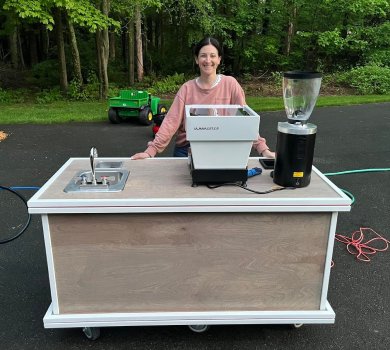
If you're researching the coffee cart industry right now, you probably feel the same way I did.
- A little frustrated.
- A little nervous.
- And unsure where to begin.
That’s exactly why I built this plan.
- Simple.
- Clear.
- Step-by-step.

Can a Coffee Cart Business Actually Be Profitable?
This is the question most future coffee operators eventually ask.
Coffee has strong margins, but the answer depends on four things:
- Your cost per cup
- Your pricing (your margin)
- Your monthly expenses
- Your sales volume
Most people get stuck trying to calculate these numbers. I've watched companies bleed profit one cup at a time.
Some spend weeks researching.
Others give up and simply hope things work out. A failure to plan is a plan to fail.
The Coffee Cart
Profit Calculator
One of the most powerful tools inside this guide is the Coffee Cart Profit Calculator.
Instead of trying to build complicated spreadsheets, you simply enter your numbers.
The calculator instantly shows:
Profit margin per drink
Estimated Gross Profit
monthly operating costs
Net Profit Potential
In just a few minutes, you’ll know whether your coffee cart idea could actually make money.

Skip Weeks of Research
Most people researching coffee carts spend weeks digging through:
- YouTube videos
- Forums
- Blogs
- Random advice online
Trying to piece together the numbers.
This guide organizes everything into one clear system so you can run the numbers in a single sitting.
Instead of guessing, you’ll have a plan.

The Cost of Guessing
Most new coffee cart operators make one of two mistakes.
They underestimate their costs, or they underprice their drinks.
Both mistakes can destroy profitability.
If your drink pricing is wrong by just one dollar, that mistake could cost thousands of dollars over the course of a year.
Many operators spend thousands of dollars on equipment before they ever calculate their numbers.
The Coffee Cart Business Plan flips that process.
First you run the numbers.
Then you decide if the business makes sense.
How Much Is Your Time Worth?
Many people spend 20–40 hours researching the coffee cart business.

Trying to calculate costs.

Trying to estimate profit.
Trying to understand regulations.
The Coffee Cart Business Plan condenses years of experience into a clear system.
Price of the guide: $39
Time saved: potentially dozens of hours.
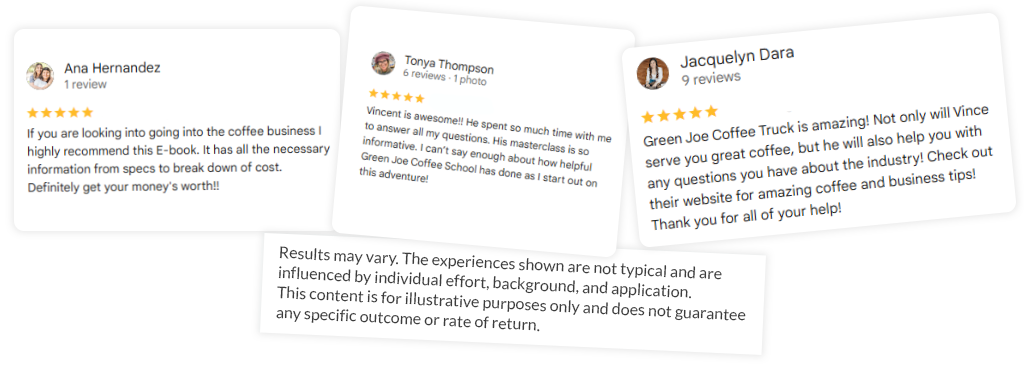
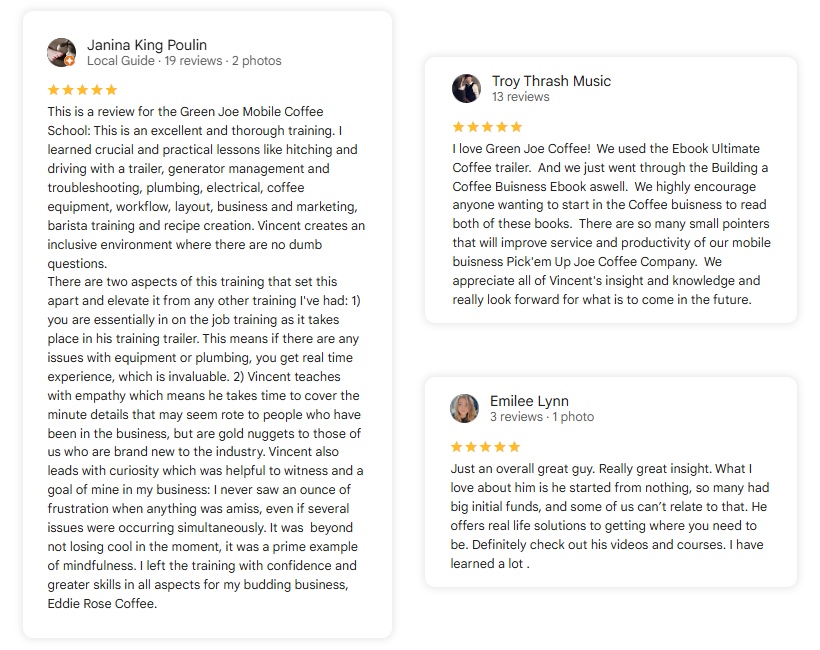
Coffee Entrepreneurs Across the Country Use These Methods
Students have used these tools to launch Coffee Carts and Coffee Catering Businesses:
Coffee carts • Coffee catering businesses
What’s Inside the Coffee Cart Business Plan
- Coffee Cart Profit Calculator
- Startup checklist
- Cost-of-goods system
- Monthly expense planner
- Startup cost breakdown
- Equipment recommendations including espresso machines
- Generator and power guidance
- Menu pricing strategies
- Catering pricing guidance
- Health department navigation
- Coffee sourcing advice
- Sample menu template
Everything designed to answer the most important question:
Will this business be profitable?


About the Author
Vincent LaVolpa
Founder of BeanSprouts, Green Joe Coffee School, and Big Dipper Coffee.
I own three coffee carts and two coffee trailers.
I’ve run a brick-and-mortar café and a coffee roasting operation.
I’ve spent over ten years in the coffee industry.
I’m not some online guru that learned from other online gurus.
I’ve been in the trenches.
Over the years I’ve helped thousands of entrepreneurs launch mobile coffee businesses including:
- coffee carts
- coffee trailers
- coffee trucks
- drive-through coffee stands
My focus is simple:
Help entrepreneurs understand their numbers before they invest money.
Know Your Numbers Before You Start
The biggest mistake new coffee operators make is spending money before understanding the math.
The Coffee Cart Business Plan helps you answer the most important question first.
Will the business actually make money?
Instant download • Secure checkout • Lifetime access
Frequently Asked Questions
Coffee carts can be profitable because coffee drinks typically have strong margins. Profitability depends on pricing, ingredient costs, and how many drinks are sold.
For example, a common catering event with 100 people at $7 per drink can generate $700 in revenue. Large catering events can generate over $10,000 in revenue.
Starting a coffee cart can cost anywhere from under $1,000 for a simple DIY setup to $10,000 or more for a fully equipped professional cart.
Basic DIY coffee carts can be built for under $1,000.
Used equipment setups often range from $2,000–$6,000.
Premium carts can cost $5,000 or more, and top-of-the-line espresso machines can start around $7,000.
The total cost depends on the cart design, equipment quality, and local health department requirements.
Yes. A coffee cart can be a great side hustle because startup costs are relatively low and you can operate part-time at events, markets, and catering gigs. Many operators start with weekend events or private catering before deciding whether to grow the business into a full-time mobile coffee operation.
Yes, a coffee cart business can absolutely be worth it if you’re looking for a low-cost way to enter the coffee industry. Compared to opening a traditional coffee shop, coffee carts have much lower startup costs, lower overhead, and the flexibility to operate at events, markets, and catering gigs.
Because specialty coffee has strong margins and growing demand, many operators start with a coffee cart as a side hustle and eventually grow into full-time mobile coffee businesses.
Most coffee carts require a health department permit and a fire department permit to operate legally. Additional requirements often include business licenses and food safety certification depending on the city or state.
Common coffee cart permits and licenses include:
- Health department permit
- Fire department permit
- State business license
- City business license
- EIN (Employer Identification Number)
- Food safety certification (such as ServSafe)
Professional barista training is typically not required by law, although many operators choose to take classes to improve their skills.
It depends heavily on the weather. In colder environments, coffee carts are limited by how quickly drinks can be heated and prepared, which depends largely on the quality of the espresso machine.
Higher-quality espresso machines can typically produce about one drink per minute, meaning many carts can serve around 50–60 drinks per hour under normal conditions.
In hot weather or high-volume events, drinks can often be batched ahead of time. With batching, tap systems, and multiple cashiers handling transactions, well-planned coffee carts can serve hundreds of drinks per hour.
Yes. Coffee carts tend to perform best at morning events, family events, and events with a strong start time. On a typical well-placed event, coffee carts may serve around 10% of the event attendance. For example, an event with 1,000 attendees may generate around 100 drink sales. Merchandise and grab-and-go pastries can increase profitability even further.
A typical coffee cart requires several essential pieces of equipment to safely prepare and serve drinks. Most espresso coffee carts need an espresso machine, grinder, water system, refrigeration, and a way to accept payments.
Basic coffee cart equipment includes:
- Espresso machine
- Espresso grinder
- Water pump
- Water filtration system
- Handwashing sink
- Refrigerator or milk cooler
- Ice storage or ice bin
- Payment system (POS or card reader)
Additional equipment may include a coffee brewer, blender, or matcha preparation tools depending on the menu.
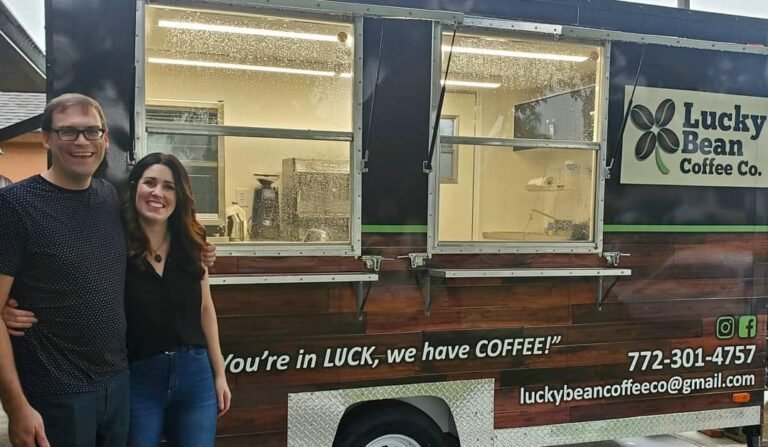
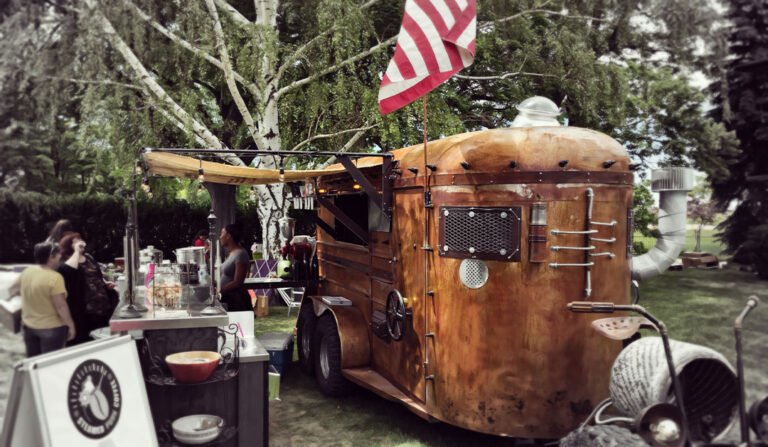
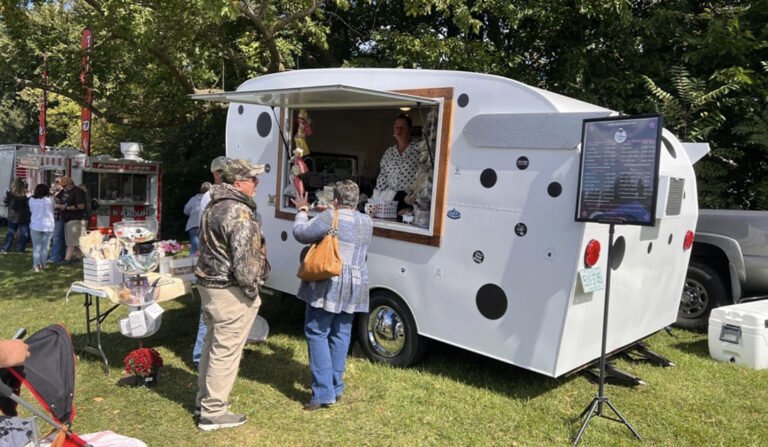
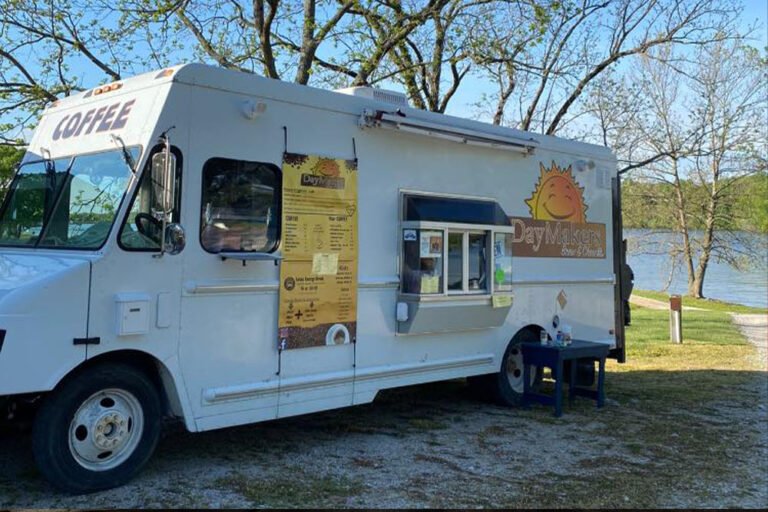
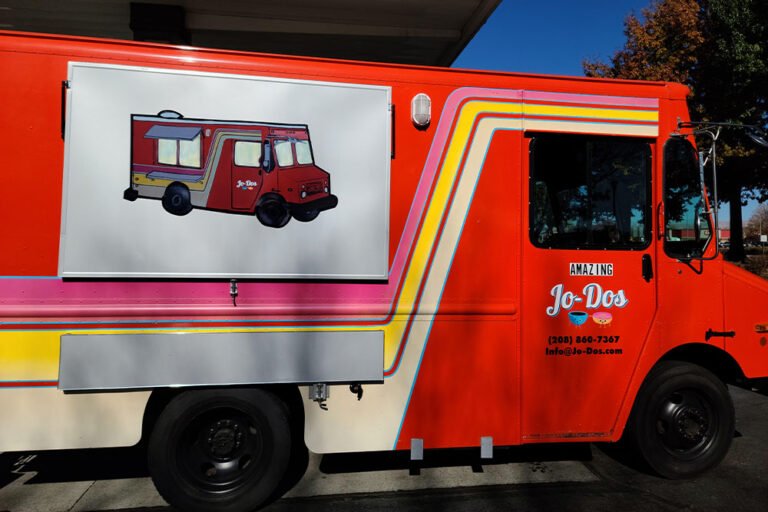
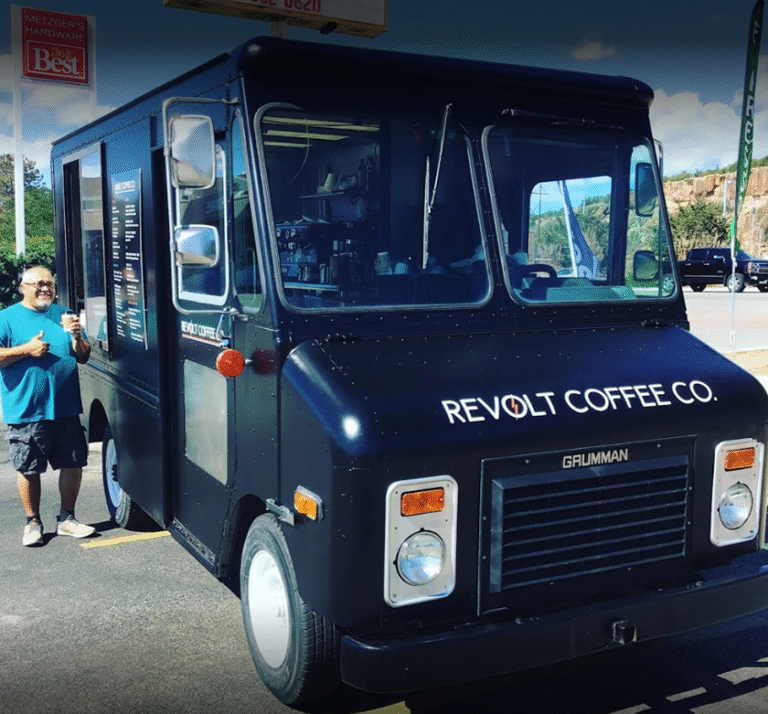
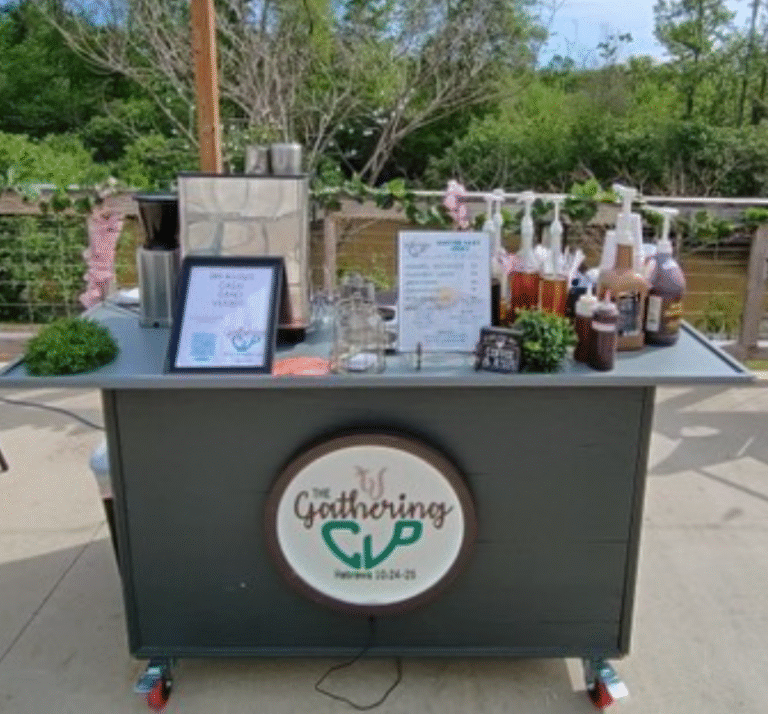
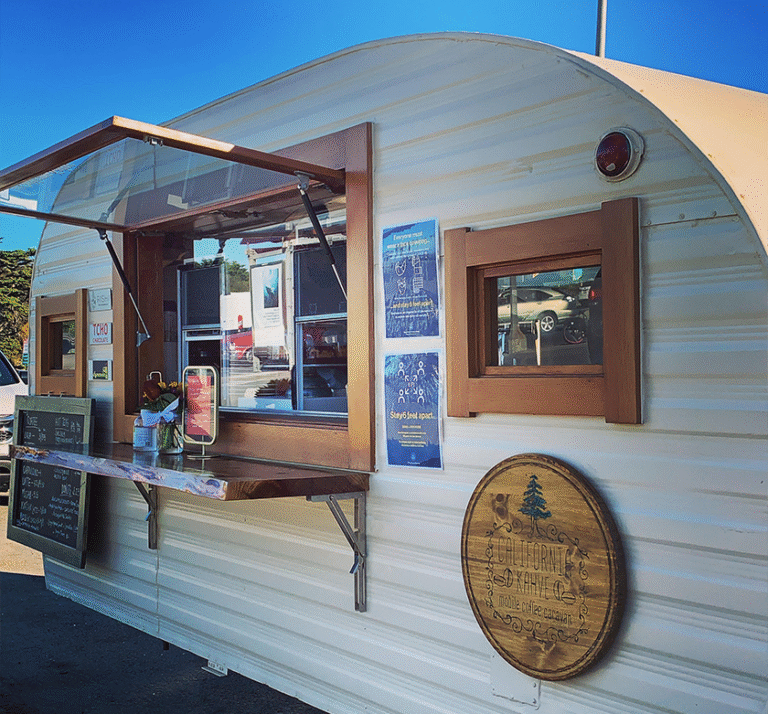
Trucks, Trailers, and Carts We’ve Helped Bring to Life





Know Your Numbers Before You Start
The biggest mistake new coffee operators make is spending money before understanding the math.
The Coffee Cart Business Plan helps you answer the most important question first.
Will the business actually make money?
Instant download • Secure checkout • Lifetime access