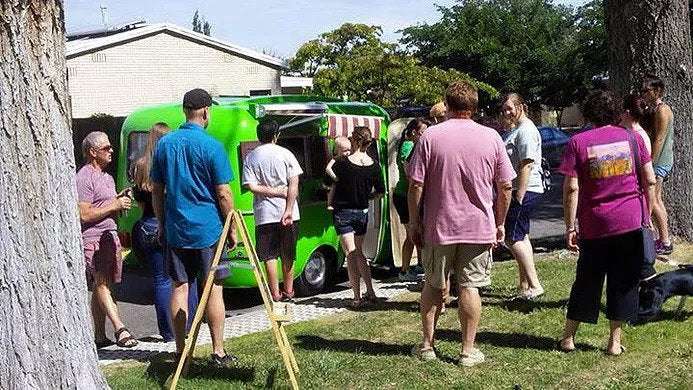

If you’re starting a mobile coffee business, you’ve probably gone back and forth between launching a coffee cart or building a full coffee trailer. Both are solid business models. Both can be profitable. But if you want the truth about what the health department thinks the moment you walk into that office?
Coffee carts get flagged as higher-risk — almost every time.
Here’s why.
1. Environmental Exposure (The #1 Red Flag Inspectors Look For)
A mobile coffee cart is open to the world. Wind, dust, bugs, customers leaning over the counter — everything hits your setup directly.
Health departments care deeply about contamination control, and an open cart naturally increases the risk of:
Pests and insects
Airborne debris
Customers touching surfaces
Cross-contamination
Unprotected food and drink equipment
A coffee trailer is an enclosed unit. Walls, ceiling, ventilation, screens — you can control the environment, keep pests out, and keep your prep area protected.
Inspectors love that. It eliminates half their concerns before the conversation even starts.
2. Temperature Control (The Hardest Part of Running a Coffee Cart)
If you can’t maintain proper temperatures, you’re out of compliance. Simple as that.
Coffee trailers usually have:
Built-in mechanical refrigerators
Insulation
Controlled ambient temperature
Full electrical systems
Meanwhile, coffee carts struggle with:
Heat from the sun
Coolers losing temp
No insulation
Limited electrical supply
Ambient temperatures swinging all day
When an inspector sees a cart, their first thought is:
“Can this operator keep milk below 41°F all day?”
If the answer isn’t a confident yes, you’re in trouble.
3. Pathogen Reduction (Enclosed Always Beats Open-Air)
Pathogens spread fast in open environments. Coffee trailers allow you to control airflow, protect equipment, and reduce exposure.
Coffee carts face challenges with:
Airborne contaminants
Dust blowing into prep areas
Customers breathing/coughing over drinks
Limited enclosed storage
This is why many cities add extra requirements for coffee carts, including:
Overhead protection
Sneeze guards
Commissary visits after every event
Stricter cleaning logs
They’re not trying to be difficult — they just see more risk.
So… Which Is Right for Your Business?
Coffee Carts:
Lower startup cost
Fast to launch
Great for offices, events, and pop-ups
Small footprint
But…
Stricter health department hurdles
Harder temperature control
More exposure to environment
Limited equipment
Coffee Trailers:
Higher approval rate
Easier to control temps
Full equipment + sinks
Higher volume and bigger menus
More long-term stability
If you want easier health department approval, a coffee trailer wins.
If you want the lowest overhead and you don’t mind following stricter protocols, a mobile coffee cart still works.
Get My Free Step-By-Step Coffee Cart & Trailer Checklist
Before you choose your setup, grab the checklist I give all my students. It walks you through every step of launching a profitable mobile coffee business, from permits to equipment to layout planning.
👉 Free Step-By-Step Checklist
https://greenjoecoffeeschool.com/free-step-by-step-checklist/
Final Word
Both models can win. Both can make money. But understanding how inspectors view the risks will save you headaches, delays, and expensive redesigns.
Choose the model that matches your goals — and make sure you’re building it the right way from day one.